 |
|||||||||||||||||||
- Open acces -
|
|||||||||||||||||||
|
|||||||||||||||||||
|
|||||||||||||||||||
|
|||||||||||||||||||
|
|||||||||||||||||||
|
|||||||||||||||||||
 |
|
|
|
||||||||||||||||


Organizational culture modeling
Valentina Mihaela GHINEA,
Academy of Economic Studies, Bucharest Constantin BRĂTIANU, Academy of Economic Studies, Bucharest
Abstract. The purpose of this paper
is to present a conceptual analysis of
organizational culture modeling in
the framework of system dynamics.
Tom Peters and Robert Waterman
demonstrated through their seminal
research that organizational culture
constitutes one of the most important
key success factors in any company
trying to achieve excellence in its
business. Organizational culture is a
strong nonlinear integrator of the
organizational intellectual capital
acting especially on the emotional
knowledge field, and contributing
significantly to the motivation of
employees. Modeling organizational
culture is a challenge due to its
complexity and nonlinear
phenomena.
Keyword: integrator, modeling,
organizational culture, system
dynamics.
|
|||||||||
 |
||||
 |
Conferences
 2012.10.12-13 [ archives ]
Publications
The Classes of Economic Concentration and the 80% Factor , Cezar Mereuță
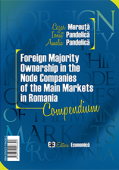
 Foreign Majority Ownership in the Node Companies of the Main Markets in Romania - Compendium , Cezar Mereuță, Ionuț Pandelică, Amalia Pandelică
 Archives
|
 |
||
 |
 |
 |
||
|
2007-2014 © Editura Economică |
||||
 |
|
|
|
|