 |
|||||||||||||||||||
- Open acces -
|
|||||||||||||||||||
|
|||||||||||||||||||
|
|||||||||||||||||||
|
|||||||||||||||||||
|
|||||||||||||||||||
|
|||||||||||||||||||
 |
|
|
|
||||||||||||||||


Management & Marketing no. 1/2010
Board composition, process, and activism: evidence within American firms
Scott SCARBOROUGH,
University of Toledo, USA Jeffrey J. HAYNIE, Auburn University, USA Christopher SHOOK, Auburn University, USA
Abstract. This study provided an empirical test of the effects of compositional and process
variables on board activism. The attributes examined were functional area knowledge,
independence, duality, and effort norms. The findings from this study provided support for the
positive relationships between both functional area knowledge and effort norms and board
activism. The strong relationship between effort norms and activism indicates the importance
of process variables in board research and the need for additional research using process
variables in a board context giving further insight into board activism and governance.
Additionally, the relationship between functional area knowledge and board activism
highlights how boards ability to meet cognitive demands is critical in board performance.
These results as well as future research directions are examined in the discussion.
Keyword: board activism, board governance, board attributes, strategic management.
|
||||||||
 |
||||
 |
Conferences
 2012.10.12-13 [ archives ]
Publications
The Classes of Economic Concentration and the 80% Factor , Cezar Mereuță
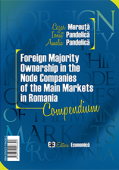
 Foreign Majority Ownership in the Node Companies of the Main Markets in Romania - Compendium , Cezar Mereuță, Ionuț Pandelică, Amalia Pandelică
 Archives
|
 |
||
 |
 |
 |
||
|
2007-2014 © Editura Economică |
||||
 |
|
|
|
|